In the Philippines, the concept of the love team — two stars who are paired onscreen (and often off-screen) in a romantic context — is more than just casting. It is a cultural institution. As explained in the Wikipedia article on love teams, the practice goes back to early Philippine cinema, and it remains a core part of our media and fandom.
Through the decades, different love teams captured the hearts of each generation, setting trends in film, television, pop culture, and fandom. For any blog about Filipino stars, mapping the top ten love teams that defined each era is a way of tracing not just romance, but social change, media evolution, and audience fandom.
Here are ten pairings — in roughly chronological order — that stand out as generational landmarks. For each I’ll talk about: the pairing, the era, why they mattered, and what legacy they left.
1.Nora Aunor & Tirso Cruz III (“Guy & Pip”)

Era: Late 1960s into the 1970s
Why they mattered: Dubbed “Guy & Pip”, Nora Aunor and Tirso Cruz III became the benchmark love team in Philippine cinema. They started as youth‐oriented film stars (their first major film pairing is cited as Young Girl in 1969) and went on to dominate box office hits, recordings, TV shows, and even tours abroad.
Impact:
- They showed how a pairing could be multi‐platform (movies + music + TV), elevating the concept of “idol couple”.
- They appealed deeply to the masses: Aunor represented the ordinary Filipino girl, Cruz the charming male lead — bridging class, region, aspiration.
- Their popularity helped build the star‐system of Philippine studios in the ‘70s.
Legacy: They set the model love‐team blueprint for succeeding generations: pairing two bankable stars, strong chemistry, cross‐medium presence. When people ask “old school love team,” many still refer to Guy & Pip.
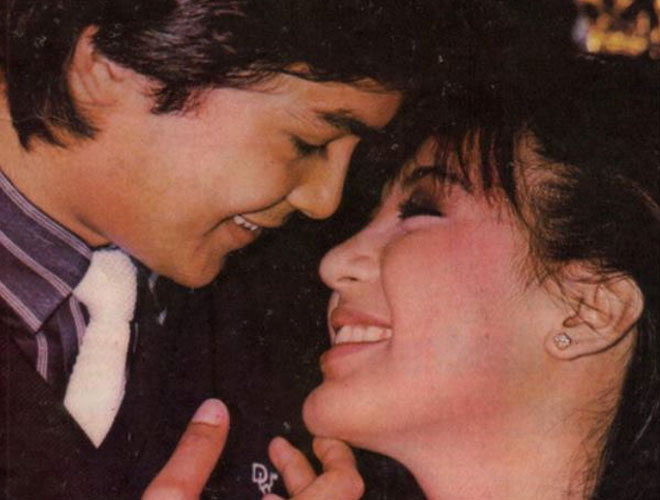
2. Sharon Cuneta & Gabby Concepcion (“ShaGab”)
Era: Early 1980s
Why they mattered: Sharon Cuneta “The Megastar” and Gabby Concepcion formed one of the biggest love teams of the ‘80s. Their film Dear Heart (1981) marked Cuneta’s debut as main actress and became a commercial success.
Impact:
- They defined the ‘80s kilig culture: youthful but glamorous, aspirational but romantic.
- Their pairing showed the shift from purely studio‐dominated teen stars to more individual branding (Sharon’s mega-pop status, Gabby’s heartthrob image).
Legacy: By the time the ‘80s closed, they had become reference names for romantic pairs. Many later fans looked back to ShaGab as the benchmark of that era’s “ultimate” love team.
3. Rico Yan & Claudine Barretto (“RYCB”)

Era: Mid-to-late 1990s
Why they mattered: Rico Yan and Claudine Barretto captured the hearts of Gen Y. Their storyline in the television series Mula sa Puso (1997–99) made them household names, and their films (e.g., Dahil Mahal na Mahal Kita, 1998) cemented their box office power.
Impact:
- They brought a more intense, emotional kind of romance — sometimes with dark edges — that resonated with teenage and young adult audiences.
- Their timing coincided with the rise of satellite TV, cable, and increasing access to media, meaning their romantic image spread farther and faster.
Legacy: The duo is still fondly remembered; for many 90s fans, Rico & Claudine are the love team of their youth. Their pairing also marked the shift into a more youth‐oriented “love team as brand” era.
4. Marvin Agustin & Jolina Magdangal (“MarJo”)

Era: Late 1990s – early 2000s
Why they mattered: The love team of Marvin Agustin and Jolina Magdangal became a phenomenon among teens. With cheerful, pop‐culture friendly films like Labs Kita… Okey Ka Lang? (1998), they defined a bubbly, wholesome kind of romance.
Impact:
- They leaned into youth‐branding: high school, pop music, vibrant fashion.
- Their films often had soundtracks that became hits — merging music + cinema + romance.
Legacy: MarJo represent the bridge between the sturdier 90s romantic drama pairing and the more brand‐driven love teams of the 2000s. Their style of pairing — accessible, happy, fun — paved the way for more teen‐rom-com driven tandems.
5. John Lloyd Cruz & Bea Alonzo

Era: Mid-2000s to early 2010s
Why they mattered: John Lloyd Cruz and Bea Alonzo became one of the most acclaimed pairs in Philippine romance‐drama. Their film One More Chance (2007) is still often cited among the most memorable Filipino love stories.
Impact:
- Their pairing matured the love-team concept: less purely teen, more adult, dealing with real relationship issues, career conflicts, the push/pull of love.
- They demonstrated that love teams could carry serious dramatic weight while remaining commercial.
Legacy: For the generation growing up in the 2000s, John Lloyd & Bea are the “how we imagine romance” standard: deeper, more layered, with emotional complexity. Their style influenced a generation of drama series and films.
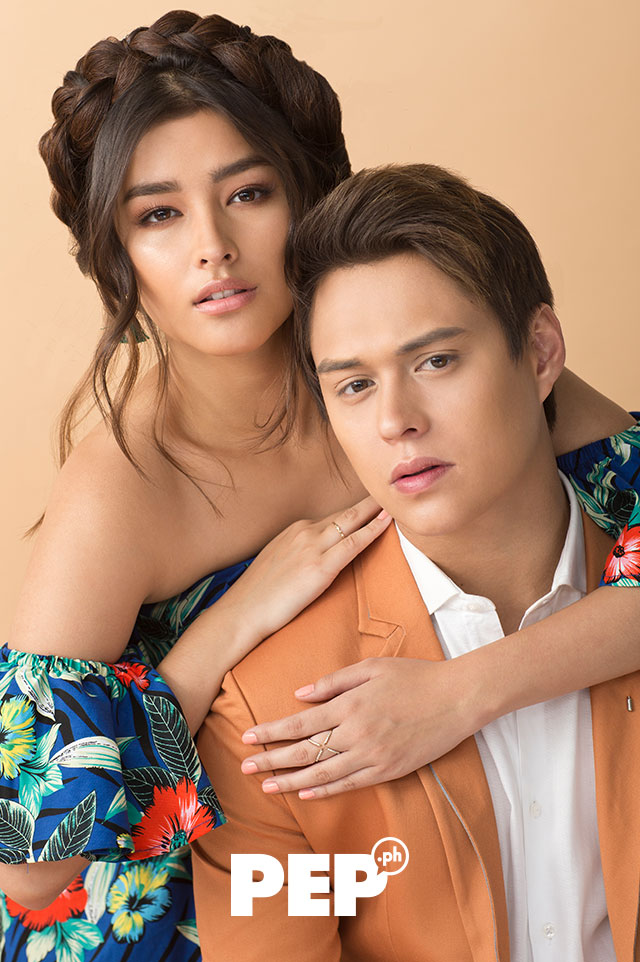
6. Liza Soberano & Enrique Gil (“LizQuen”)
Era: Mid‐2010s
Why they mattered: Liza Soberano and Enrique Gil became a breakout romantic pairing for millennials and Gen Z. Their series Forevermore (2014–15) and films like My Ex and Whys (2017) generated huge fandom.
Impact:
- They tapped into the young adult audience with modern settings (travel, careers, social media).
- Their appeal incorporated both tradition (romantic tropes) and modernity (digital culture, younger lead stars) — making them relevant to a younger, digitally active generation.
Legacy: LizQuen show how love teams were evolving: the pairing still has marketing muscle, but the tone is more global, more youthful, and the fandom more online.
7. Kathryn Bernardo & Daniel Padilla (“KathNiel”)

Era: Early 2010s to 2020s
Why they mattered: Kathryn Bernardo and Daniel Padilla dominated the 2010s as one of the strongest love teams in Philippine showbiz. Their film The Hows of Us (2018) broke box‐office records.
Impact:
- Their appeal spans teen romance, adult relationship issues, and cross‐platform presence (TV, film, streaming, vlogging).
- They show how love teams became large commercial enterprises: their films grossed big, their endorsements brand deals massive.
Legacy: KathNiel arguably defined an entire decade of Filipino romance entertainment. Recently their professional/formal real‐life separation (confirmed in late 2023) marked the end of an era.
8. Maine Mendoza & Alden Richards (“AlDub”)

Era: Mid‐2010s
Why they mattered: Alden Richards and Maine Mendoza began on the variety show Eat Bulaga!’s “Kalyeserye” segment in 2015 and became a social media phenomenon. The portmanteau “AlDub” (Alden + Dub(smash/ Mendoza)) became instantly recognizable.
Impact:
- Their popularity exploded via live TV and Twitter: “Tamang Panahon” (their event) set record ratings and online trending.
- They showed how love teams were no longer just about scripted romance but audience engagement, real-time social media fandom, and participatory culture.
Legacy: AlDub transformed how love teams operate in the digital era. Their fandom extended globally (especially among overseas Filipino communities) and pointed the way to how new love teams must engage beyond traditional media.
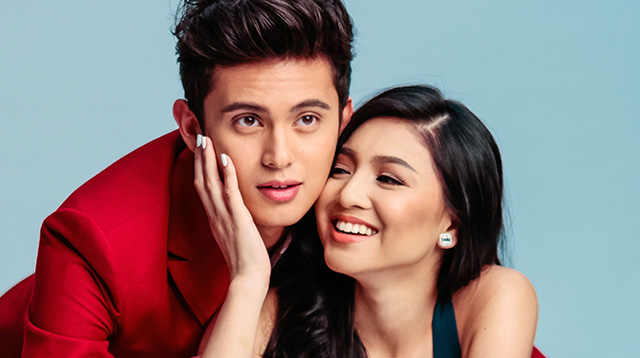
9. James Reid & Nadine Lustre (“JaDine”)
Era: Late 2010s
Why they mattered: James Reid and Nadine Lustre represented a more modern, experimental love team. Their film On the Wings of Love (2015 TV series) and later big screen projects drew the young adult audience.
Impact:
- Their image was more contemporary: musicals, pop acts, overseas shows, young adult lifestyles.
- They had substantial real-life public interest (linking of reel & real) which added fan investment in their pairing.
Legacy: JaDine stands for the “millennial love team”: fusing music, film, real-life branding, and the shift toward streaming/pop culture sensibilities.
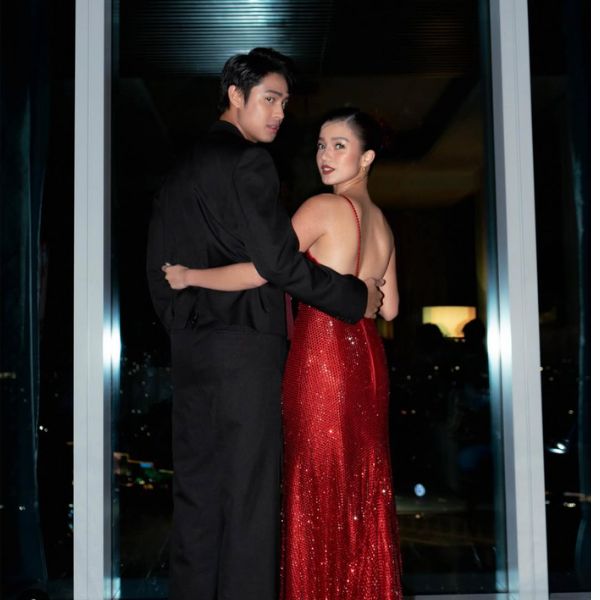
10. Donny Pangilinan & Belle Mariano (“DonBelle”)
Era: 2020s and emerging
Why they matter: Though still younger in tenure compared to the earlier teams, Donny Pangilinan and Belle Mariano is already making significant waves in contemporary Filipino pop culture. DonBelle’s breakout film Love Is Color Blind on Netflix Philippines shows their rise.
Impact:
- They show how love teams are now also digital-first (streaming platforms), socially connected, reaching Gen Z and Gen Alpha audiences.
- Their fandom is highly social-media native – built with YouTube, TikTok, Instagram.
Legacy (in progress): If past patterns hold, DonBelle may very well define this decade’s love-team era. Their success might influence how love teams work in a post‐pandemic, streaming-first entertainment ecosystem.
Why These Ten?
- Representation across eras: From the ‘70s (Guy & Pip) to the 2020s (DonBelle), the list covers major decades of Philippine entertainment.
- Cultural impact: Each pairing did more than star in a show—they influenced how Filipinos feel, talk about, and consume romance in media.
- Evolving model of love teams: We see the shift from movies/TV only → multi-platform (music, endorsements) → digital/social media integrated.
- Fandom & commercial power: Love teams became brands, and each of these tandems shows increasing scale of fandom, endorsements, box-office numbers.
- Enduring legacies: Many of these pairings are still referenced today, whether through nostalgia, fan revival, or new media coverage.
Observations & Trends
The Shift in Medium
In earlier decades, love teams were largely driven by studios and film/TV releases. With each generation:
- ‘70s & ‘80s: Cinema & television dominated.
- ‘90s: Rise of youth‐oriented shows, more teen romance, more television alongside film.
- 2000s: Mature stories, star vehicles, strategic marketing.
- 2010s: Digital presence, streaming, social media engagement.
- 2020s: Streaming platforms, online fandom, global reach.
Fandom and Branding
As noted in “Iconic Filipino Love Teams That Made Us Believe in Forever”, love teams became more than on-screen pairings—they were brands.
With the internet and social media, the audience became co-creators of the narrative (e.g., fan pages, hashtags, meet‐ups). The AlDub phenomenon is a prime example of social media power.
Also, “love team” explains how the pairing often involves fans’ hope of real-life romance which heightens engagement.
Commercialization & Stakes
Each successive generation showed increasing commercial stakes: bigger box offices, bigger endorsements, cross‐platform launches. For instance, The Hows of Us (KathNiel) achieved major box office milestones.
Love teams now drive not just film/TV ratings but online metrics, streaming hits, brand partnerships.
What It Means for Filipino Culture
Love teams are both escapism and identification. They reflect aspirations (romantic, social) and allow fans to project their hopes. At the same time, they serve as markers of generational change — what teen romance looked like in the ‘70s is quite different from what it looks like now: the language, platform, aesthetics all shift.
Hence, by listing the top ten, you’re doing a kind of social history via romance.
Decades Change, But the Kilig Remains the Same
Love teams are more than just “cute couples onscreen”. They are cultural phenomena, tied to media shifts, marketing, fandom, and the dreaming heart of Filipino audiences. The ten pairings above — from Guy & Pip in the ‘70s to DonBelle in the 2020s — each defined their generation, shaped how Filipinos engage with romance in media, and left marks that still ripple today.